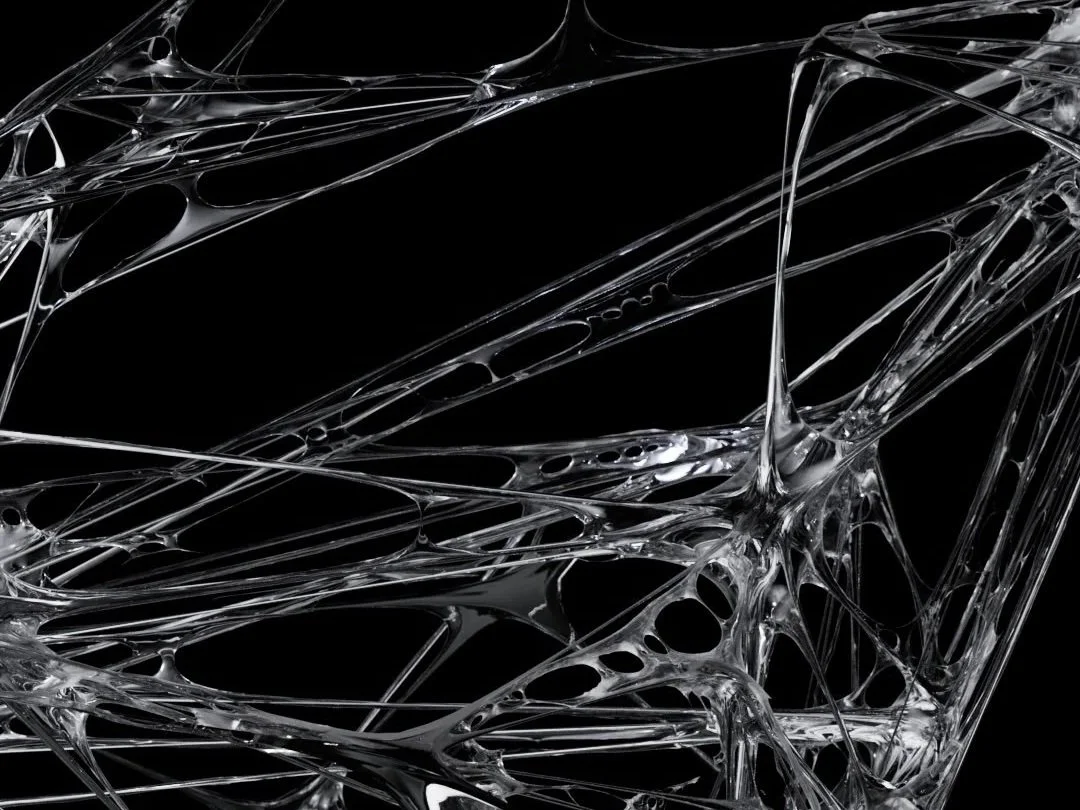
You've been taught to care for your muscles, heart and skin. Fascia rarely comes up, yet it surrounds every one of them.
Fascia is the collagen-based connective tissue that wraps every muscle, bone, nerve and organ. It runs from head to toe as one continuous network. For most of medical history it was treated as packing material and cut away during dissection. Over the past two decades, researchers have shown it is something more: a sensory organ, a force-sharing system and an active tissue that adapts to how you live.
That last point is why fascia matters now. Your fascia remodels around your daily posture. For many Philadelphians, that posture is seated, screen-facing and still for most of the day.
If you read our earlier article on massage, fascia and lymphatic health, this post goes deeper into what healthy fascia does and how to protect it.
What healthy fascia does
Healthy fascia does four jobs at once: it senses, connects, glides and adapts.
1. It is one of your richest sensory organs
Fascia is packed with nerve endings that respond to pressure, stretch and movement. Fascia researcher Robert Schleip of Ulm University estimates that the fascial layer of a muscle carries roughly six times as many sensory nerves as the muscle tissue itself [1]. These receptors feed your sense of where your body is in space, called proprioception.
Some of those nerve endings also signal pain. The thoracolumbar fascia of the low back is densely innervated, including with fibers presumed to carry pain signals [3]. It also contains a large share of sympathetic nerve fibers, part of the same system that drives your stress response [2].
2. It connects your body into one system
Muscles don't only pull on their tendons. Force also travels sideways through fascia into neighboring muscles, a process called myofascial force transmission [4]. A 2016 systematic review of dissection studies concluded that most skeletal muscles in the body are directly linked by connective tissue [5]. One well-supported chain runs from the sole of the foot through the calf and hamstrings to the low back.
This is why tension in one area can show up somewhere else, and why treatment often works beyond the spot that hurts.
3. It glides
Deep fascia is built in layers of dense collagen separated by a slippery, hyaluronan-rich layer. Specialized cells called fasciacytes produce that lubricant so the layers slide over each other and over the muscle below [6]. Smooth glide is what free, easy movement feels like.
4. It adapts, and can actively tighten
Fascia is not purely passive. A 2019 study found contractile cells called myofibroblasts in human fascia, most densely in the low back, and concluded that they actively regulate tissue tension [10]. Fascia also slowly rebuilds itself: an estimated half of the body's collagen fibrils are replaced each year [11]. What you repeat every day shapes what it rebuilds.
How modern life changes your fascia
Fascia adapts to what you repeat. For most of us, what we repeat is stillness in a few fixed shapes.
Stillness thickens the glide layer. Immobility can raise the concentration and viscosity of hyaluronan, reducing lubrication between layers of fascia and muscle [7]. In people with chronic low back pain, ultrasound shows the layers of the low-back fascia slide about 20% less than in people without pain [8].
Restricted movement alone is enough to reduce glide. In an animal study from the same research group, restricting movement for eight weeks reduced fascial glide even without injury. Injury plus restricted movement cut glide by 52% compared with controls [9]. Researchers concluded that even a healed injury can affect fascia away from the injured spot, especially when movement is also limited.
Daily posture becomes structure. Because fascia keeps rebuilding along the lines of load it experiences, the shapes you hold for hours are the shapes it reinforces [11].
Early changes are reversible; late ones are harder. Stecco's group distinguishes densification, a change in the fluid between layers that is easily reversible, from fibrosis, where the collagen itself binds layers together [12]. Long-standing densification can progress to fibrosis. The earlier you address stiffness, the more of it you can undo.
Signs your fascia needs attention
Fascial restriction rarely announces itself as one sharp pain. It tends to show up as a pattern:
Morning stiffness that eases once you start moving
A neck that won't turn fully when you check your blind spot
A band of tightness across the upper back or between the shoulder blades
Shoulders that sit rounded forward even when you try to stand tall
Jaw tension, clenching or tension headaches after long screen days
Tight hamstrings or hips that don't change with stretching
Discomfort that moves around or appears away from where the problem started
None of these is a diagnosis. Sudden, severe, or worsening pain, numbness, tingling or weakness should be checked by a physician first.
How to keep your fascia healthy
Healthy fascia needs variety, warmth, and regular input. Here is what supports it.
Move often, in many directions. Fascia responds to varied load. Twisting, reaching and bending in different directions maintains more glide than repeating one movement.
Break up long holds. Stand, walk or shift position every 30 to 60 minutes at a desk. On long drives, reset your posture at every stop.
Lift your screen. Bring your phone toward eye level and lower your eyes, not your head [14].
Use warmth. Fascia researchers report that hyaluronan becomes more fluid with heat. Warm-ups, warm showers and heat before stretching all help [13].
Breathe deeply. Slow, full breaths move the ribs, diaphragm and fascia of the trunk. They also calm the stress response that fascia is wired into.
Get regular myofascial work. Deep, sustained manual pressure is among the methods shown to help reverse hyaluronan aggregation and restore glide [13]. For chronic neck pain, clinical trials found 60-minute sessions two to three times a week worked best [16].
Be patient. Glide can improve within a session, but lasting structural change takes longer. Collagen renews slowly: about 30% in six months and 75% in two years [11]. Consistency over months is what changes how your body holds itself.
Myofascial massage in Center City Philadelphia
BONNIE is a myofascial and lymphatic massage studio in Center City Philadelphia (19107), a short walk from Jefferson. Sessions are built for the tissues modern posture strains most, and for the desk workers, commuters and healthcare staff who live in those postures.
Service
POSTURE
50 min
Myofascial work on the upper body and head to restore mobility and make good posture easier to hold
SCULPT
50 min
Lymphatic and myofascial work on the face, head and neck to reduce puffiness and release facial tension
Signature
80 min
POSTURE and SCULPT combined
Every session includes red light therapy, guided breathwork and a calming sound environment to help your nervous system settle. Between visits, follow @bonnietherapy for the stretches and exercises that help results last.
Introductory pricing is available for a limited time. Book your session at bonnietherapy.com.
Frequently asked questions
What is fascia? Fascia is the collagen-based connective tissue that wraps and connects every muscle, bone, nerve and organ in the body as one continuous network.
Why is healthy fascia important? Healthy fascia lets muscles glide, shares force between muscles, and feeds your brain information about movement and position. When it stiffens, movement gets harder and pain becomes more likely.
Can sitting all day affect my fascia? Yes. Immobility makes the lubricant between fascial layers thicker, and restricted movement alone has been shown to reduce fascial glide [7], [9].
What is myofascial release? Myofascial release is a manual therapy that uses slow, sustained pressure to restore glide between fascial layers and reduce tension in muscle and fascia.
How long does it take to change fascia? Glide can improve within a session. Lasting change takes months, because collagen renews slowly: an estimated 30% in six months and 75% in two years [11].
Where can I get myofascial massage in Philadelphia? BONNIE offers sessions in Center City Philadelphia, near Jefferson. Book at bonnietherapy.com.
This article is for educational purposes and is not medical advice. If you have a medical condition, recent surgery, an active infection or a blood clot, check with your physician before massage.