Jaw tension is one of the most common reasons people come to BONNIE. It shows up as a tight, sore jaw, clicking when you chew, headaches at the temples, or teeth that are clenched before you even notice.
Most people call it "TMJ." Understanding what that term actually refers to, and which muscles are involved, makes it much easier to understand why it happens, what a session can do, and why what you do every day matters just as much.
First, the TMJ Is a Joint
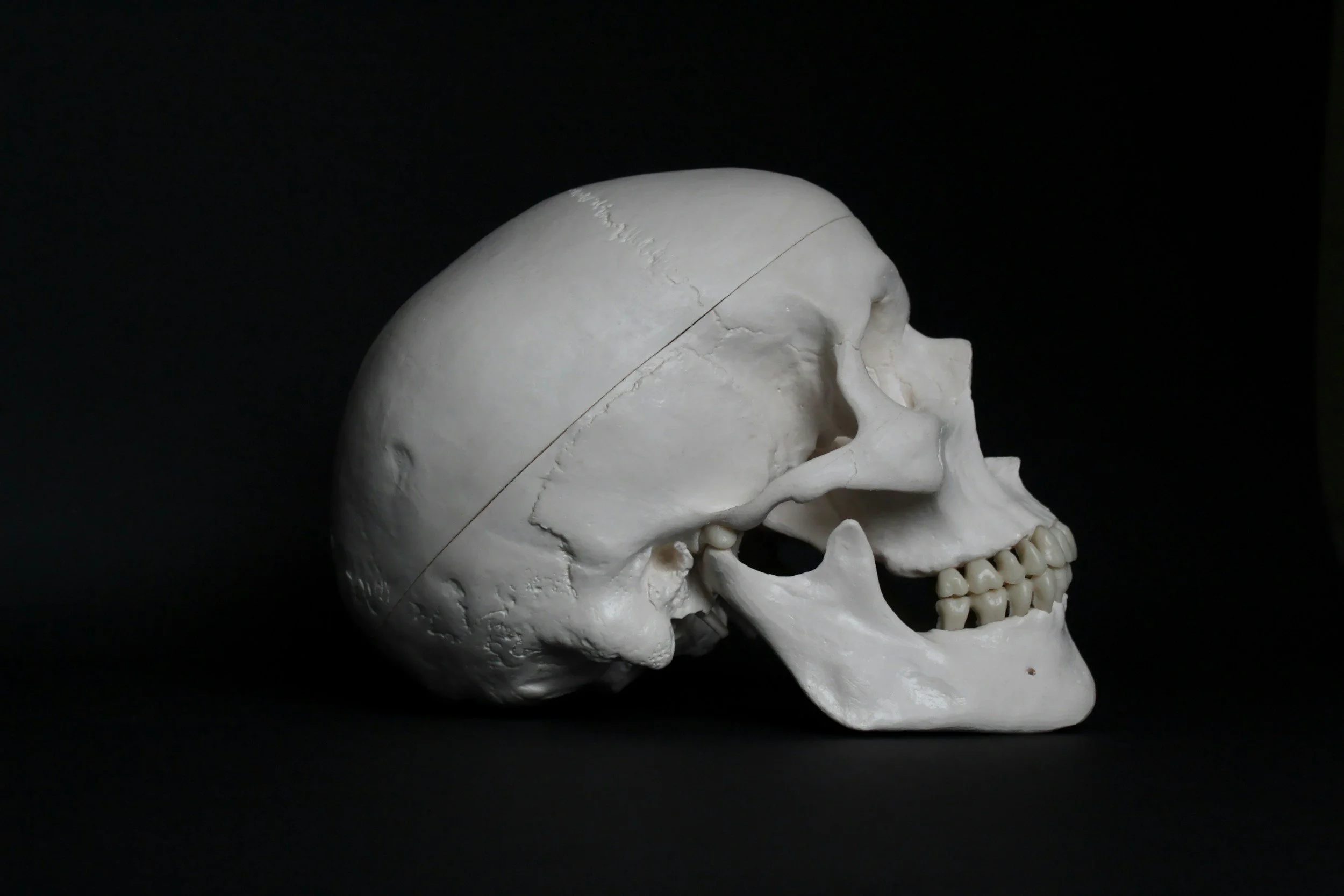
TMJ stands for temporomandibular joint. It's the joint that connects your lower jaw (the mandible) to the temporal bone of your skull. You have two, one on each side. You can feel them by placing your fingers just in front of your ears and opening your mouth.
It's one of the most complex joints in the body. It doesn't only hinge open and closed. It also glides forward and side to side, which allows you to talk, chew, and yawn. A small disc of cartilage sits between the bones to keep that movement smooth.
When people say "I have TMJ," they usually mean a temporomandibular disorder, or TMD. According to the National Institute of Dental and Craniofacial Research, TMDs are a group of more than 30 conditions that cause pain and dysfunction in the jaw joint and the muscles that control jaw movement. They're grouped into three main types: disorders of the joint itself, disorders of the chewing muscles, and headaches associated with TMD.
Much of the everyday jaw tension people feel comes from the muscles. That's where massage can help.
The Muscles Behind Jaw Tension
Masseter. The thick muscle at the angle of your jaw that bulges when you bite down. It's one of the strongest muscles in the body for its size, and it's the main muscle involved in clenching. When it's overworked, it can feel tight and tender, and over time it can make the lower face look wider and more tense.
Temporalis. A fan-shaped muscle that covers the side of your head at the temples. It helps close the jaw. When it's tight, it often shows up as tension headaches at the temples.
Pterygoids. Two pairs of muscles deep inside the jaw that help open it and move it forward and side to side. They're difficult to reach directly, but they're often involved in clicking and restricted movement.
Neck and upper back muscles. The jaw doesn't work alone. The muscles at the front and back of the neck, including the sternocleidomastoid and the small suboccipital muscles at the base of the skull, help hold the head and jaw in position. Because they're connected through fascia, tension in the neck often travels into the jaw, and the reverse.
Common Signs of Jaw Tension
Tightness or soreness in the jaw, especially in the morning
Clicking, popping, or a grating feeling when you open or chew
Difficulty opening your mouth fully
Headaches at the temples (read more about tension headaches)
Aching around the ears
Tooth sensitivity or wear from clenching or grinding
Tight neck and shoulders
What Contributes to It
Clenching and grinding, during the day or during sleep
Stress. The jaw is one of the first places the body braces under pressure.
Forward head posture from screens, which makes the jaw and neck muscles work harder (read about tech neck)
Habits like chewing gum, biting nails, or chewing on one side
Poor sleep
Injury to the jaw, head, or neck
Many TMDs are short-lived and ease on their own, but some become long-lasting. That's why both professional care and daily habits matter.
When to See a Dentist or Doctor First
BONNIE sessions support muscle tension and relaxation. They are not a diagnosis or a replacement for medical or dental care. See a dentist or doctor if you have:
A jaw that locks open or closed
Severe or worsening pain
Pain after an injury to the jaw or face
Significant changes in how your teeth fit together
Many people do best with a team approach: a dentist for diagnosis and a night guard if needed, plus regular hands-on work to release the muscles. In fact, the simplest approaches, like self-care, gentle jaw exercises, and heat, are often recommended first.
How BONNIE Sessions Help
A BONNIE session addresses jaw tension from several directions at once.
Myofascial release. Slow, sustained pressure on the masseter and temporalis, around the joint, and along the scalp helps tight tissue soften and lengthen. Fascia responds to time, not force, so the work is steady and never aggressive. (Learn how myofascial release works.)
Neck and upper body work. Releasing the neck, the base of the skull, and the shoulders takes pressure off the jaw from below. This is a key part of Signature and POSTURE sessions.
Lymphatic massage. Light, rhythmic strokes help move fluid that can collect along the jaw and under the chin when the area is tight and inflamed. (Read the Lymphatic System 101.)
Breathwork and sound. Clenching is closely tied to stress. Guided breathing and calming sound help shift the nervous system out of a braced, alert state, which is often when the jaw finally lets go.
Red light therapy. Red light has been studied for its ability to reduce inflammation and support muscle recovery, and it's a warm, calming way to close the session.
Best fit: Signature focuses on the face, jaw, head, and neck then adds upper body work for a complete approach when jaw tension comes with neck and shoulder tension.
Your Part: Daily Habits That Make Results Last
The muscles of the jaw adapt to what they do every day. A session can release tension, but if clenching, posture, and stress continue unchanged, the tension returns. Lasting change happens when the work in the room is supported by small habits at home.
Learn your resting position. Lips together, teeth apart, tongue resting gently on the roof of your mouth just behind your front teeth. Your teeth should only touch when you chew or swallow.
Catch yourself clenching. Choose a cue, such as picking up your phone, stopping at a red light, or sitting down at your desk, and check your jaw each time.
Rest the jaw during flare-ups. Choose softer foods, cut food into smaller pieces, and skip gum and very chewy foods.
Use warmth. A warm compress on the jaw for 10 to 15 minutes helps the muscles relax, especially before bed.
Massage gently. Use your fingertips to make small, slow circles on the masseter and temples for one to two minutes. Keep the pressure comfortable.
Mind your posture. Bring screens to eye level so your head stays over your shoulders.
Support your yawns. Place a hand under your chin to keep from opening too wide.
Breathe low and slow. A few minutes of slow belly breathing each day lowers the stress that drives clenching.
Follow your dentist's guidance. If you've been given a night guard, wear it consistently.
Why Both Matter
Think of sessions as resetting the muscles and your daily habits as keeping them there. Clients who pair regular sessions with these habits usually notice the biggest and longest lasting changes. For most people with ongoing jaw tension, sessions every one to two weeks at first, then every three to four weeks, is a good starting rhythm. (See how often to book.)
Book Your Session
Where: 1126 Walnut St Philadelphia, PA 19107, a short walk from Jefferson
Services: SCULPT (50 min), POSTURE (50 min), Signature (80 min), all with red light therapy
Book online: bonnietherapy.com
Book your Signature session now and give your jaw the chance to let go.
Keep Reading
For jaw releases, posture tips, and daily education, follow @bonnietherapy on Instagram.